SLANA warns NVOCC business declining amid THC concerns
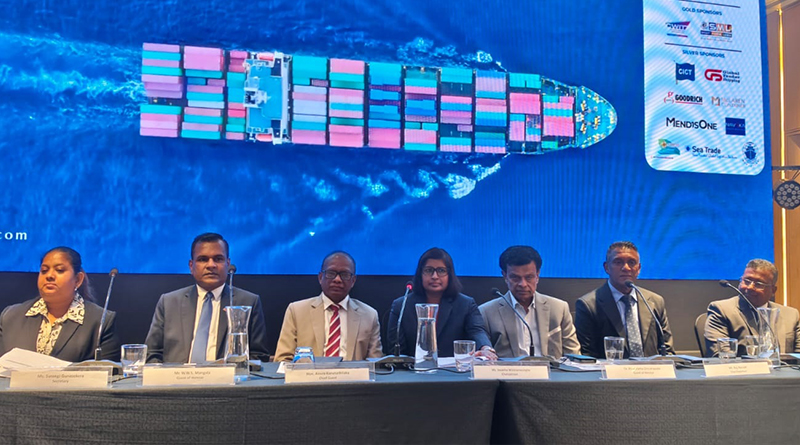
Sri Lanka’s Non-Vessel Operating Common Carrier (NVOCC) business is declining at a time when the sector is expanding in some other regional markets, Chairperson of the Sri Lanka Association of NVOCC Agents (SLANA), Swabha Wickramasinghe, said.
Wickramasinghe, who was elected for a third consecutive term at SLANA’s ninth Annual General Meeting held yesterday, said the continued difficulty in collecting Colombo Terminal Handling Charges (THC) as a separate land-based cost was one of the key challenges facing the industry.
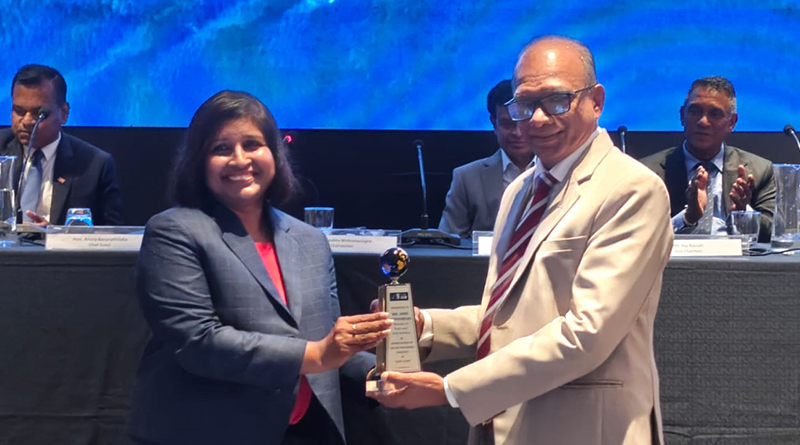
“Internationally, THC is treated as a separate land-based cost. Sri Lanka, however, continues to follow a different practice, putting our principals at a clear competitive disadvantage,” she said.
She said the issue goes beyond the charge itself, as principals consider the overall economics of operating into Colombo.
“When Sri Lanka becomes less commercially attractive compared with other regional destinations, the consequences eventually reach our members,” Wickramasinghe said.
She noted that the majority of SLANA members are small and medium-sized enterprises that employ people, pay taxes, invest in their operations and contribute to the country’s trade.
“Therefore, this is not simply a request to improve the profitability of one sector. It is about creating a fair and internationally competitive operating environment for Sri Lankan businesses,” she said.
Wickramasinghe said that at SLANA’s recent meeting with the Minister and Deputy Minister, it was agreed that a committee would be appointed to evaluate the THC issue.
“We respectfully request that the Honourable Minister expedite the appointment of this committee and the evaluation process,” she said.
Another concern highlighted by SLANA was the continued situation involving uncleared salt containers at the Port of Colombo.
She said SLANA has been engaging with Sri Lanka Customs and the Ministry of Ports and Shipping to find a suitable solution.
“We appreciate the Government’s willingness to review this matter, including the possibility of submitting a Cabinet paper to facilitate a workable resolution,” she said.
However, she noted that the association was yet to receive a final decision and called for an urgent solution to enable the empty containers to be released.
Wickramasinghe also highlighted the impact of geopolitical developments on the shipping and logistics industry.
“Geopolitical conflicts, including the Middle East conflict, sanctions, changes in trade policies and disruptions to established shipping routes can have an immediate impact on global trade,” she said.
She said NVOCC lines have been operating in the region since the early 1990s, working closely with feeder shipping lines and utilising feeder slots.
The sector has developed into a regional business model covering the Indian subcontinent, the Far East including China, the Middle East and the Upper Gulf, with connectivity extending to Africa and Russia.
India remains particularly important to Sri Lanka’s trade, while China and India together account for around 44% of Sri Lanka’s imports. India is also Sri Lanka’s second-largest export market, she said.
“This is where NVOCCs play an important role in supporting Sri Lanka’s regional trade,” Wickramasinghe said.
She recalled the role played by NVOCC operators during the COVID-19 pandemic, when many mainline carriers focused on long-haul trade lanes to Europe and the United States.
“During that period, NVOCCs played a critical role in keeping regional trade moving and supporting our exporters,” she said.
With more than 75 NVOCC lines currently operating in Sri Lanka, including specialised ISO tank operators, she said the industry’s contribution should be recognised and supported by the Ministry.
SLANA is also monitoring proposed rates and charges for services provided by Container Depot Operators. Following a request from the Merchant Shipping Secretariat, the association formally submitted the views and concerns of its members.
“We appreciate the Government’s efforts to bring stakeholders together, and we believe that Inland Container Depot charges should remain reasonable and competitive with those in regional ports in India, Pakistan and Bangladesh,” Wickramasinghe said.
Meanwhile, Minister of Ports and Civil Aviation Anura Karunathilaka commended SLANA for its contribution to strengthening Sri Lanka’s port sector, noting that transshipment remains a major strength of the country’s maritime industry.
He said Sri Lanka should focus on expanding regional business while exploring new areas including bunkering, freight forwarding, e-commerce logistics and other emerging segments.

Dr. Parakrama Dissanayake, Chairman of the Sri Lanka Ports Authority, outlined plans for the expansion of the Port of Colombo and stressed the need for industry stakeholders to develop alternative strategies to mitigate the impact of the Middle East crisis.
He pointed to the tea industry as an example of how businesses can adapt to disruptions by using alternative routes.
“The tea industry did this by channelling their cargo through alternative routes,” he said.
Despite the challenges, Wickramasinghe said there was considerable reason for optimism, particularly with the continued development of the Port of Colombo.
“The continued development of the Port of Colombo is a key reason for this optimism,” she said.
However, she said the larger opportunity went beyond simply handling more containers, pointing to a growing vision to develop a logistics hub within and around the Colombo Port area as part of the country’s wider port and logistics planning.
Wickramasinghe also outlined several corporate social responsibility initiatives undertaken by SLANA as part of its contribution to the wider community.